
 By
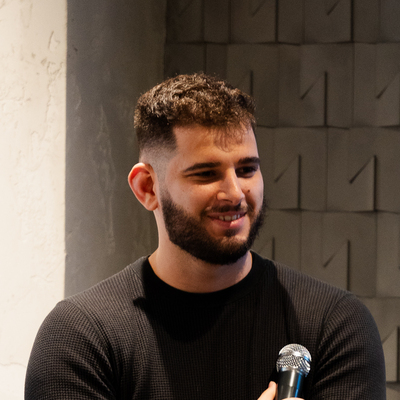
Erdem Mustafa flew into Orlando for the Digital Travel Summit with 15 to 20 meetings already on his calendar. He didn't get them by walking the expo floor. He picked the people he wanted to meet, looked them up, and started conversations on LinkedIn before he ever got on the plane.
Erdem is Head of Global Sales at Social Plus. He's been in SaaS sales for more than fifteen years and has led teams for ten. He was the first guest on Linkdify Live, our new podcast with Linkdify users. We talked about selling to a room full of different decision makers, why he left HeyReach, and his test for whether a sales tool is worth paying for.
Company: Social Plus (social.plus, formerly Amity Social Cloud), which sells APIs, SDKs and UI kits that let consumer brands add feeds, chat, groups, comments and UGC video to their own apps.
Size: Founded in 2021, 51-200 employees, and more than 100 million monthly end users across customer apps.
Backed by: SMDV, 500 Global, Gobi Partners, ITOCHU, Wavemaker Partners, Agaeti Ventures and Redbeat Ventures.
Customers include: Ulta Beauty, Harley-Davidson, Noom, Talkspace and Volkswagen.
Team: Global sales team led by Erdem Mustafa, selling to product, marketing, CX, digital and engineering leaders.
Before: Manual Sales Navigator work, then HeyReach.
Result: LinkedIn became a planned channel for the whole team. At one conference, Erdem had 15 to 20 meetings booked before he arrived.
The challenge: one product, five different buyers
Social Plus helps brands add social features to apps they already own. A fitness app can give its members a feed and group chat. A sports app can let fans comment and share video. The customers stay inside the brand's app and don't drift off to some other platform to talk.
The hard part is that nobody wakes up looking for "social infrastructure." Erdem told me the product solves a different problem depending on who's listening. Product leaders care about engagement and retention. Marketing cares about first-party data and UGC. CX wants a better customer experience. Engineering wants to know how much work it would take to build and maintain this themselves.
So the team runs separate outreach for each persona. They look for the one person at an account who cares the most, talk to them about their own problem, and help that person sell Social Plus to the rest of the company.
Erdem actually likes this. "I'd rather help shape that motion than walk into something where the playbook's already been written out," he said.
The most common objection he hears is "we can build this ourselves." He doesn't argue the point. Engineers can obviously build a feed or a chat. His question back is whether they want to spend the next few years maintaining it, scaling it, moderating it, and adding features to it. For most companies, he says, the answer comes down to engineering time and where they'd rather spend it.
Before Linkdify: manual lists, then HeyReach
Social Plus's buyers live on LinkedIn, so it was always going to be an important channel. But for a long time the team's process looked like most sales teams'. Reps built lists by hand in Sales Navigator, sent connection requests one at a time, wrote every message, and tried to remember who needed a follow-up.
That works for ten prospects. It falls apart when you want LinkedIn to be a consistent channel across a whole team.
The team moved to HeyReach. Erdem found the interface clunkier than it needed to be, and support was slow.
"A lot of times I would reach out with questions or I would get errors, and it would be over 24 hours before I'd get some sort of response back. A lot of times I'd end up having to hound down my account manager in order to get that information."
He also had a firm rule for whatever came next. He wanted structure around LinkedIn without turning it into another mass email channel. In his words: "I absolutely do not want a thousand generic AI messages going under my name."
Want LinkedIn outreach that runs itself?
Linkdify finds your leads, writes personalized messages, and sends them at safe, human-paced limits.
Why Social Plus switched to Linkdify
When I asked what was different, the first thing Erdem brought up was the writing. He called the AI messaging "way more sophisticated and just way more human" than anything HeyReach had produced.
After that it was the day-to-day stuff. The interface is easier to run. Uploading a list, adding new contacts the team is targeting, and assigning leads to specific reps all take less effort. Support answers quickly.
Reporting matters too. Erdem has to show Social Plus's C-level what activity looks like across his team, and he said Linkdify's reports are clean enough to hand over as they are.
He was also clear that the AI doesn't do everything. "Linkdify isn't going to always fix that messaging," he said. When a campaign needs the same carefully written copy going to a specific group, his team writes it themselves. The AI writer is there for the times it helps, and they skip it when it doesn't.
How the team uses LinkedIn now
The biggest change, according to Erdem, is that LinkedIn stopped being something reps did when they remembered to. Every campaign is now planned around a specific set of accounts, a persona, or an industry. They also build campaigns around the events they're going to.
"LinkedIn used to be an afterthought for my team. Now it's at the forefront of everything that they're doing."
The win: 15 to 20 meetings before landing in Orlando
The best example is the Digital Travel Summit in Orlando. Social Plus was hosting a private dinner and wanted the right attendees and speakers in the room.
The usual move is to grab the attendee list and hope you bump into the right people once you're there. Erdem did it the other way around:
- He went through the attendee and speaker list.
- He shortlisted the people he actually wanted to meet.
- He enriched their contact details.
- He ran outreach to them in Linkdify before the event.
Conversations were going before he left for Florida. He walked in with 15 to 20 meetings booked, so he didn't spend the conference chasing people down for a free slot.
He was careful not to oversell it, which I appreciated. "I'm not gonna sit here and say that every meeting or opportunity happened because of Linkdify," he said. "But it helped me get in front of the right people, especially the ones that I specifically wanted to know before I walked into that conference."
Pull the attendee and speaker list as soon as it's published. Cut it down to the people you'd actually want at your table, then start the LinkedIn conversation two to three weeks out. A short note that mentions the event and suggests a specific time to meet gets you a lot further than "see you there."
Erdem's test for any sales tool
Erdem is skeptical of a lot of the go-to-market stack. Back in June he wrote on LinkedIn that teams keep adding another enrichment tool, another AI SDR, another sequencer, and that a lot of it helps reps avoid the hard parts of selling.
When I asked what those hard parts are, he listed them. Figuring out who you need to talk to. Understanding why they'd care. Getting a response. Having a good conversation once you do, and asking the questions you might not want answered. Handling objections. Following up. "People massively underestimate how much selling is just being persistent without becoming annoying," he said.
He's happy for tools to help with research, enrichment, account prioritization and signals. Where he draws the line is when people start pretending software can replace a salesperson's judgment.
His test for a new tool is one question: does it get my rep closer to having a good conversation with the right person? If reps end up configuring the tool, cleaning up what it produced, or checking yet another dashboard, he figures he's only bought another layer.
"There are millions of go-to-market tools right now. I don't need another place for my team to spend time. I need something that gives me better information or gives them time back."
Want LinkedIn outreach that runs itself?
Linkdify finds your leads, writes personalized messages, and sends them at safe, human-paced limits.
Who Social Plus is for
If you run a consumer brand that already has an audience, Erdem wants to hear from you. Good fits include fitness and wellness, sports and fan engagement, gaming, retail, travel and media. These are companies with plenty of users who'd like those users to do more than open the app, buy something and leave.
The best way to reach him, fittingly, is on LinkedIn.
This article is based on episode 1 of Linkdify Live.